

Can an aquarium exist without plants?
An aquarium without plants is possible. The most important factor is the conversion of ammonium and nitrate. This can be achieved with an aquarium filter and/or aquarium plants. However, make sure there are plenty of hiding places and good filtration if you choose not to have plants.
Short answer: no. Long answer: it happens, and it can happen, but it requires proper precautions. However, we always recommend adding plants to the aquarium, if possible. Especially with large fish or breeding setups, you don't always see plants in the tank. Besides, not every aquarium in our country has plants either. But how do you create an aquarium without plants? We'll explain it in this blog post.
We always recommend adding plants to the aquarium. If this is simply not possible, floating plants are the ideal solution: they absorb a lot of nitrate.
Does an aquarium need plants?
The answer: It depends.
The most important thing to consider is the so-called nitrogen cycle that occurs in every aquarium. Fish release ammonium (NH4+) into the aquarium, which is then absorbed by plants. Bacteria convert the ammonium into nitrite and then back into nitrate. The nitrate can then be absorbed by plants.
With too few, or no, plants, nitrate levels can quickly rise, especially after the aquarium has just been cycled. Therefore, the nitrate and ammonium consuming plants should be replaced with an aquarium filter.
Therefore, if you decide to use a filter, it's best to ensure the filter has sufficient capacity. This way, there's enough surface area for the bacteria to live in, and the bacteria in the filter are solely responsible for removing the ammonium and nitrate.
It is of course important in such aquariums to pay extra attention to the nitrate and ammonium values.
Are both values increasing?
This means the bacteria in the filter are having a hard time converting ammonium to nitrite-nitrate. This could be due to insufficient filter capacity. In that case, use more filter wool or ceramic media.
Rising levels can also be caused by your aquarium not being properly cycled. There may not be enough bacteria in the filter to convert the ammonium. Therefore, always let your aquarium cycle for two to four weeks and only introduce fish after the nitrite peak.
Is the nitrate level increasing?
Nitrate can only be absorbed by aquarium plants. If this level is too high, you'll need to change the aquarium water more often.
Can fish live without plants?
Plants are important for fish in several ways. They're especially important if you have squid, shrimp, or other bottom-dwelling fish. Plants provide oxygen and remove harmful nitrates and phosphates. If you can address this with a good filtration system, you can keep fish without plants. Plants also provide shelter and food, which promotes fish growth.
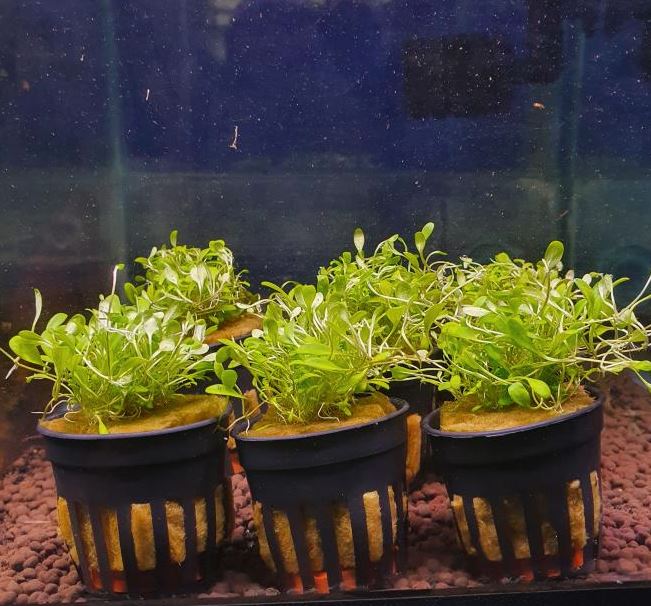
In nature, fish feed on plants and the algae that grow on them. Plants also convert CO2 and sugars (glucose) into oxygen (O2). And fish appreciate oxygen.
Fish also often use plants as hiding places to retreat to. After all, most (small) fish remain prey, and hiding is their natural behavior. Therefore, always set up your aquarium properly; the right aquarium setup ensures that fish exhibit more natural behavior.
Starting an aquarium without plants
An aquarium doesn't necessarily need plants in its initial stages. However, some people still choose to add plants, even when the aquarium is just getting started. We asked several experienced aquarium owners and regular Aquania customers.
Why we always choose plants
I always choose aquarium plants for the first 2-4 weeks of setup. I do this because aquarium plants need about 2 to 3 weeks to fully adapt to the aquarium. This way, the entire aquarium is properly established in one go.
After approximately 3 weeks, the aquarium plants will have grown well and the aquarium will be ready to receive the first fish.
Why our customers choose plants
I think it's smart to use plants when starting an aquarium, mainly because they help to introduce starter bacteria.
I always use plants when starting the grow. If a leaf rots, the bacteria can immediately digest it. The tank is also much easier to plant when it's half full.


