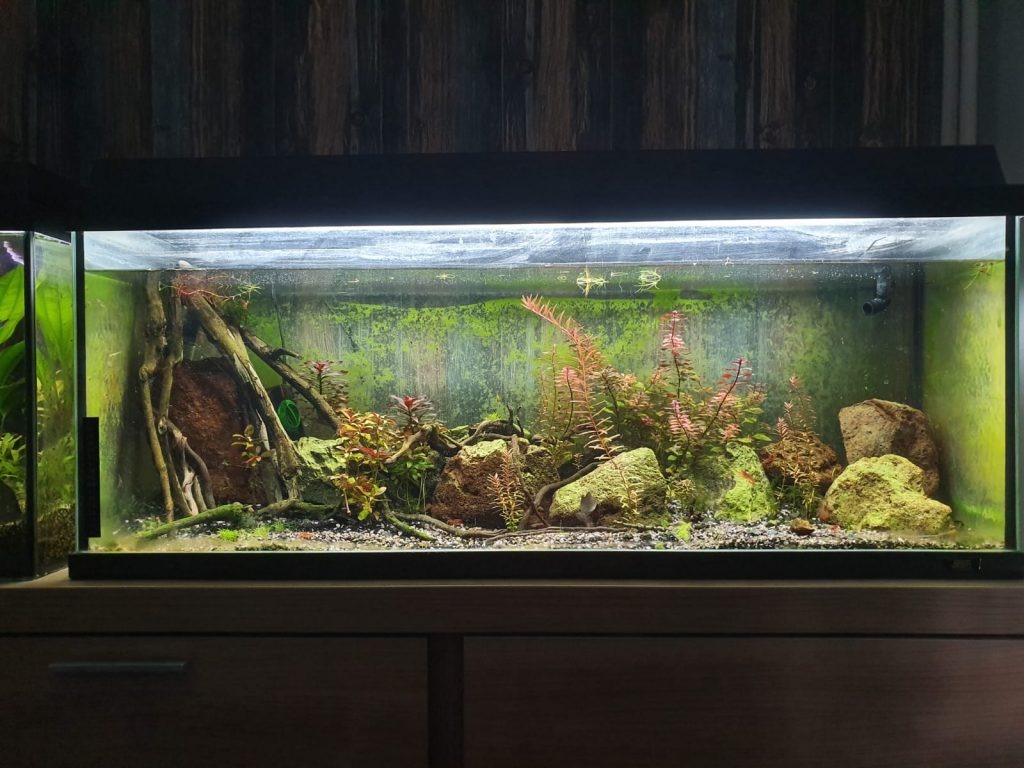
How many plants can fit in an aquarium?
It's always recommended to have at least one plant per 10 liters. However, you can also choose more or fewer plants. If you choose more plants, also provide more nutrients and CO2.
If you keep this equal to the quantity demanded by the plants, you can in principle add an unlimited amount of plants.
When you're starting your aquarium, it's difficult to choose how many plants to put in it. To achieve a good balance, the rule is: not too many plants, but also not too few. Exactly how many? That depends on the aquarium as a whole.
What is the minimum number of plants that should be in an aquarium?
The minimum number of plants your aquarium needs depends on several factors. The number of fish is a determining factor, but you also need to consider the technology you're using and the amount of lighting available. Organic waste is also a factor, as are many other factors.
There are, of course, many factors to consider. That's why, as a rule of thumb, we always use at least one plant per 10 liters of water. From that basic rule, you can then experiment with more or fewer plants in your aquarium. Pay close attention to how the aquarium reacts.
If you choose to add significantly fewer plants to your aquarium than we recommend, make sure you change your water more often and have a larger filter. This prevents your aquarium from quickly becoming unbalanced, which in turn leads to less algae and fewer diseases in your fish.
As described in the article "About an aquarium without plants," the answer to this question depends on the amount of waste present in the aquarium. Plants remove some of these waste products. They then use them to grow well, after which they return oxygen to the aquarium and its inhabitants.
Fast-growing aquarium plants absorb more nutrients than slow-growing plants. This naturally leads to the conclusion that the minimum number of plants required also depends on the type of plants in the aquarium.
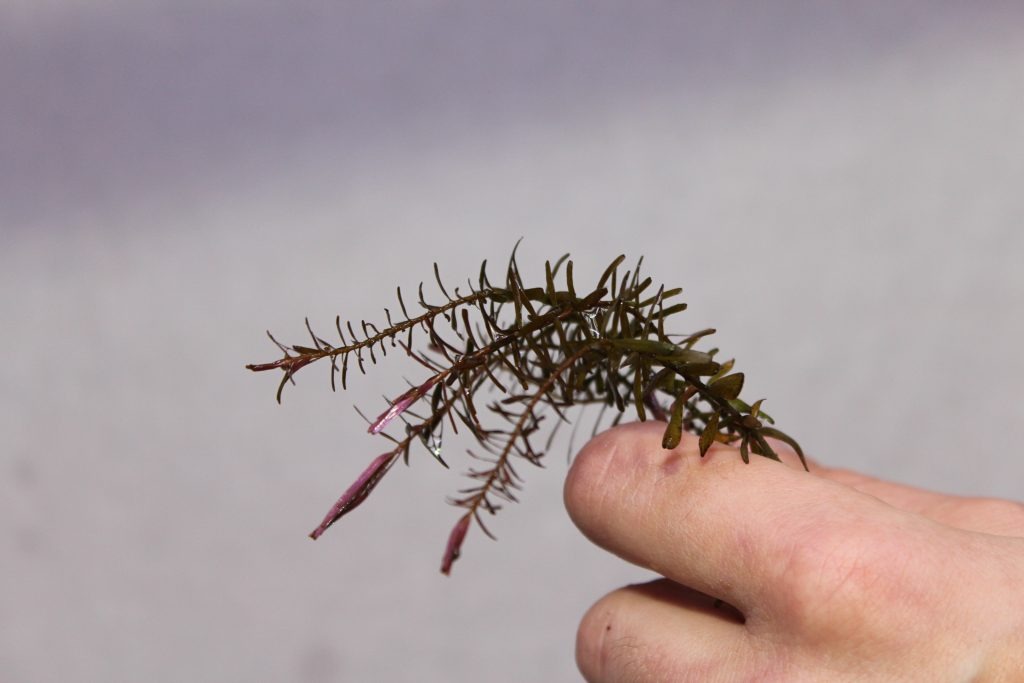
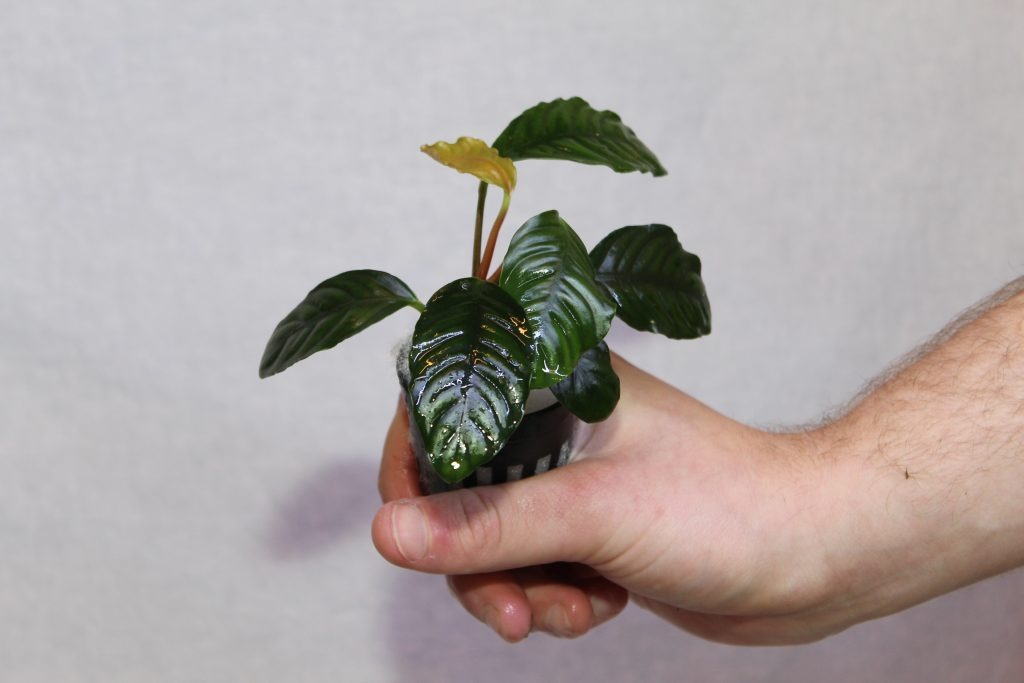
For example, stem plants, floating plants and mosses generally grow very quickly, so you should actually need fewer of these plants compared to Anubias species, rhizomatous plants and Bucephalandra™s, which grow slower and clear less waste.
Slow-growing plants therefore have more of an ornamental value than a functional one. They often have a unique appearance with thick leaves and flowers—something you don't often see in a stem plant.
When to have fewer plants in an aquarium?
It's certainly possible to have too many plants in an aquarium. This is caused by insufficient plant nutrients and CO2. With too many plants, there's not enough plant nutrients and CO2 to supply all the plants, which allows algae to take advantage of their potential and grow rapidly. The lack of these nutrients causes the plants to grow poorly.
You can read more about this in the article about poorly growing aquarium plants.
If this happens, you can choose to reduce the number of plants or increase the feeding and CO2 supply. In that case, keep a close eye on your aquarium and test for at least one week to ensure reliable results.
Adding CO2 to your aquarium can really make a world of difference! And it can make your fully planted aquarium algae-free again.
When to add more plants to an aquarium?
Plants are nature's natural filters. They can't replace frequent water changes, but they certainly make an important contribution to this process. This filtering effect is particularly beneficial in aquariums with many fish. For example, use a fast-growing aquarium plant like Elodea densa or Lysimachia nummularia.
If you're experiencing brown algae growth due to organic matter, more plants are a must! Add a cutting of waterweed or a few floating plants, and the algae will disappear within two weeks.
Even if your fish start gasping for oxygen or swim higher in the aquarium, you can add more plants. This will increase the oxygen content of the water. Never use air pumps at full speed to increase oxygen levels in your aquarium. The excessive air movement will actually deplete the oxygen in the water, which can have disastrous consequences.