

Removing rock wool from aquarium plants and information
The brown material in your aquarium plant is rockwool. Rockwool is used in hydroponic growing. It makes growing efficient, but the rockwool must be removed before the plant goes into your aquarium.
Rock wool is used in a variety of applications, such as insulation in buildings and as a growing substrate for plants. Although rock wool is frequently used by growers, we don't use it ourselves. Instead, we use another, equally well-known material. You can find more details about this in this article.
Fortunately, removing rockwool from a pot is simple: you open the pot, carefully remove the rockwool, and rinse it briefly under lukewarm running water. But why is rockwool so popular, and what advantages does it offer in the world of plant cultivation?
How do you remove rockwool from plants?
It's strongly recommended to always remove rockwool, even if your aquarium doesn't have gravel. This is because the brown material is rich in nutrients. This in itself isn't problematic, except that algae and vermin thrive on rockwool.
Fortunately, removing rockwool from the roots of an aquarium plant is easy with a little patience! Follow these steps:
- Cut open the pot and remove as much rockwool as possible with your hands, or roll the pot like a tangerine to remove the rockwool. Make sure your hand moves along with the plant roots to avoid damaging them.
- Rinse the roots under lukewarm water and gently rub them along the roots with a gentle, elastic motion. Again, this will help you move along with the roots.
- Cut the roots back to 3 centimeters. This will cause the plant to produce stress hormones, which will cause it to grow faster to protect itself.
- Now your plant is ready to inhabit your aquarium!
Growing plants in rockwool makes cultivation incredibly efficient, and with the right knowledge and proper cultivation, it's no problem at all. While many stores require you to arrange this yourself, at Aquania we handle the cultivation for you, so you can enjoy a beautiful plant right away.
Why are aquarium plants grown in rockwool?
The biggest advantage of growing aquarium plants in rockwool is that it's a relatively efficient way to cultivate them. Aquarium plants in rockwool are grown above water, so the roots search for water. The plant will work extra hard to reach the water with its roots, and this method of cultivation ensures faster and better root development. Furthermore, the ambient air contains more CO2 than when growing directly in the aquarium. This contributes to even faster growth of the aquarium plant.
The rockwool itself is highly porous, allowing a large amount of water to fit into a small amount of wool. During cultivation, this water contains a lot of nutrients, which easily absorb into the rockwool. The plant remains in this state for about four to eight weeks, after which it is briefly rinsed. Because the rockwool is so porous, most of the nutrients are easily washed out. Growers usually leave some nutrients in the water, allowing the plants to thrive for about two more weeks in a low-nutrient aquarium.
True underwater plants, such as Vallisneria Spiralis or Elodea, are grown entirely underwater. These species don't have an above-water variety. The difference is also noticeable in the roots: the underwater-grown varieties develop much thinner roots and leaves than the above-water submerged varieties.
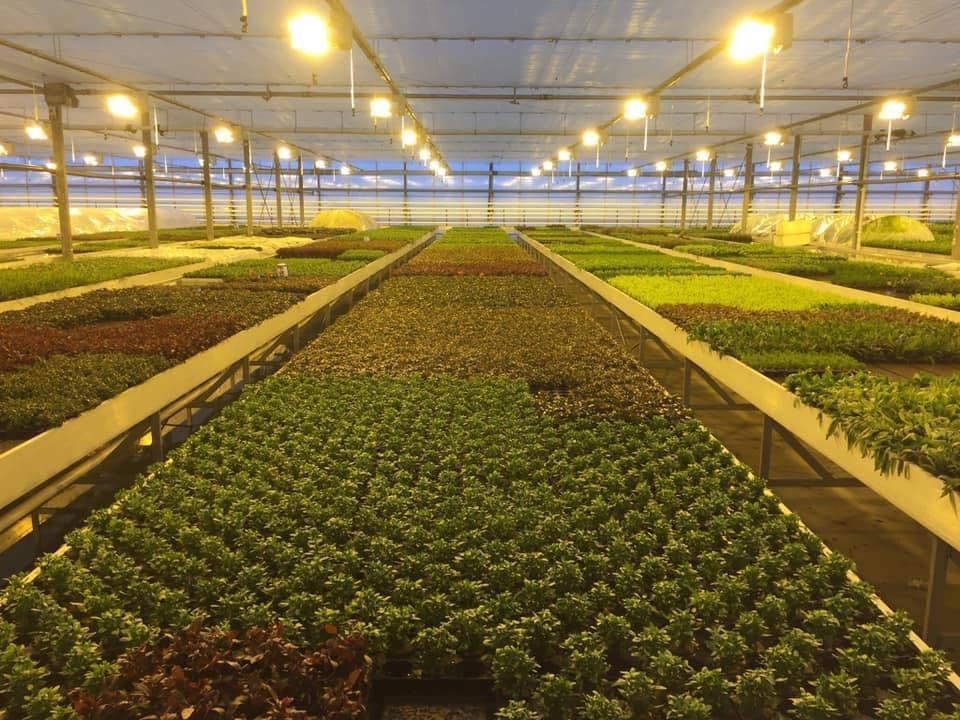
Growing aquarium plants in rockwool is a great way to offer a wide range of aquarium plants very efficiently. However, these plants develop thick, above-water leaves. These then rot away once fully submerged. This can be quite stressful for the plant, and unfortunately, not every plant survives.
You have a good chance of buying an above-water variety from a store that first needs to adapt in your aquarium before the plant starts to grow.
Be careful with rock wool in the aquarium
While rockwool is incredibly useful, you do need to be careful with it in your aquarium. If the rockwool is full of algae and too tightly packed in the pot, it will silt up and there's a good chance that the plant roots will become pinched. Furthermore, rockwool is harmful to fish. If you leave the rockwool in the pots, small pieces can come loose. These can then be eaten by fish, which can lead to blockages.
We grow our own submersible plants without rock wool
Our own aquarium plants were originally grown in rockwool, but since we now sell nusubmers plants, we've changed this. We noticed that rockwool quickly becomes clogged when fully submerged. It also raises the pH, prevents root growth, contains little oxygen, is not recyclable, and is also more difficult to remove.


