

Echinodorus plants, everything you need to know!
This article explores one of the most well-known aquarium plants: the Echinodorus. Here you'll find everything you need to know about this versatile plant species, without getting too complicated.
The Echinodorus has been a popular choice for aquariums for years and is native to North and South America. They come in various sizes and shapes, but the most common variety is the Echinodorus Bleheri.
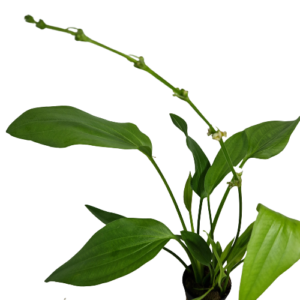
Preparing and Planting the Echinodorus in the Aquarium
Preparing Echinodorus for your aquarium is a breeze! Here are the steps:
- Remove the Echinodorus from the pot and the rockwool.
- Pull off any yellow or deformed leaves from the plant (Rosette).
- Find a spacious spot in your aquarium for the Echinodorus.
- If necessary, weigh down the roots with the supplied ceramic ring.
- Plant the Echinodorus in the gravel, but make sure that the rosette is not completely hidden at the bottom of the gravel.
With these steps, your Echinodorus will be successfully planted, regardless of the variety!
How do you cut and prune an Echinodorus?
Pruning an Echinodorus is easy. Always remove the entire leaf from the rosette; leaving half a leaf is pointless, as it will rot away. Don't worry, the plant will produce new leaves on its own! Cutting Echinodorus isn't necessary; the plant produces suckers that you can plant once they have a few centimeters of root.
Most Common Nutrient Deficiencies in Echinodorus Plants
Although Echinodorus is quite hardy, nutritional deficiencies can occur. It's important to know that dead leaves don't always mean the plant is growing poorly; this can also be related to the transition to a submerged environment.
Are the Leaves of the Echinodorus Turning Brown?
If you notice the new leaves turning brown or dark purple, it's a sign your plant needs more iron. You can solve this by adding iron or nutrient capsules to the plant's roots.
Are the Leaves of the Echinodorus Turning Yellow?
Yellow leaves indicate a nitrate (NO3) deficiency. This can be resolved with liquid nutrients or nutrient capsules.
| Shortage | Symptom | Solution |
|---|---|---|
| Iron | Brown or dark purple leaves | Add nutritional caps or liquid iron |
| Nitrate (NO3) | Yellow leaves | Add liquid food or capsules |
Easiest Recommended Echinodorus Species
Here are some of the easiest Echinodorus species to keep:
- Echinodorus Bleheri
- Echinodorus Magdalensis
- Echinodorus Tenellus
- Echinodorus Ozelot Green
- Echinodorus Chocolate Marble
Do you have any questions or would you like to share your own experiences with the Echinodorus? Then be sure to contact us via WhatsApp . We're happy to help you with all your aquarium questions!


