

Platys and Mollies: A Complete Guide
When I got my first aquarium in 2012 at the age of 12, the first fish I kept, bred, and sold were platies and mollies. Now, 12 years later, I've written an article especially for you that will make these fish popular among beginning aquarists with some basic knowledge. This way, you too can get started keeping these fantastic aquarium fish.

What makes Platys and Mollies such a popular choice for beginners?
Platies and mollies are popular with beginner aquarists because of their colorful appearance and ease of care. Both species are not only attractive with their colors and variety, but they are also exceptionally hardy and can easily cope with most aquarium conditions.
Their adaptability to varying water parameters makes them ideal for the novice angler. Platies come in a variety of colors and patterns, including red, blue, and yellow, while mollies often have an elegant, glossy appearance, ranging from black to silver and even gold.
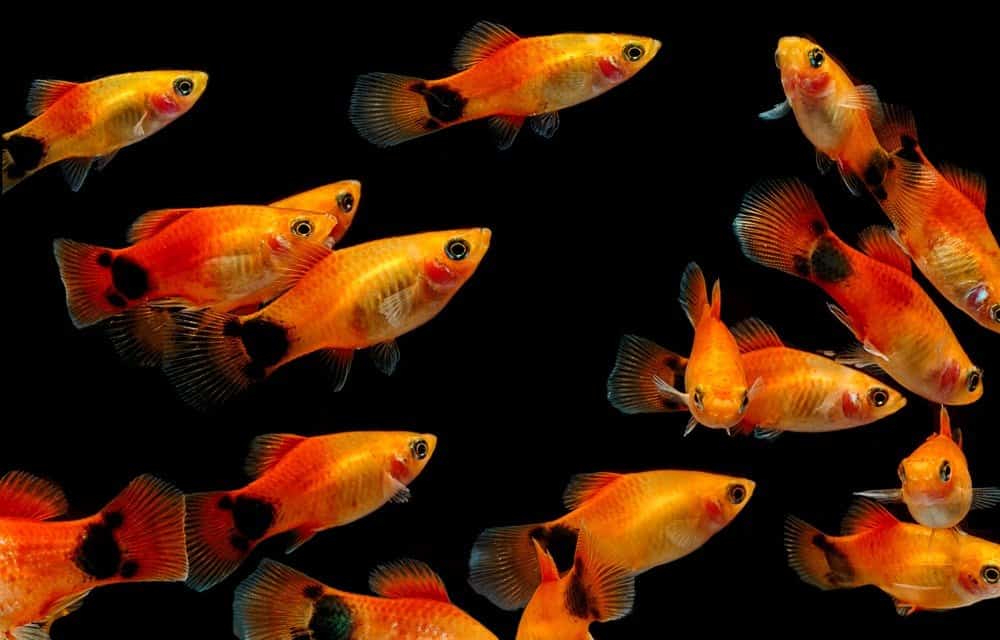
In addition, both Platies and Mollies are relatively easy to care for. They are not demanding when it comes to water quality and can thrive in a wide range of water conditions. This makes them perfect for a beginner's aquarium. This stability makes them a good introduction to the aquarium hobby for beginning aquarists.
Their calm and sociable nature makes them good companions for other fish, and they're also easy to feed. In short, their attractive appearance and forgiving care requirements make Platies and Mollies the ideal choice for anyone new to aquarium hobbyism.
In this article, I'll delve into every aspect of Platy or Mollie. Want to receive personalized tips?Send us a WhatsApp message >
What colors and varieties of Platys and Mollies are available?
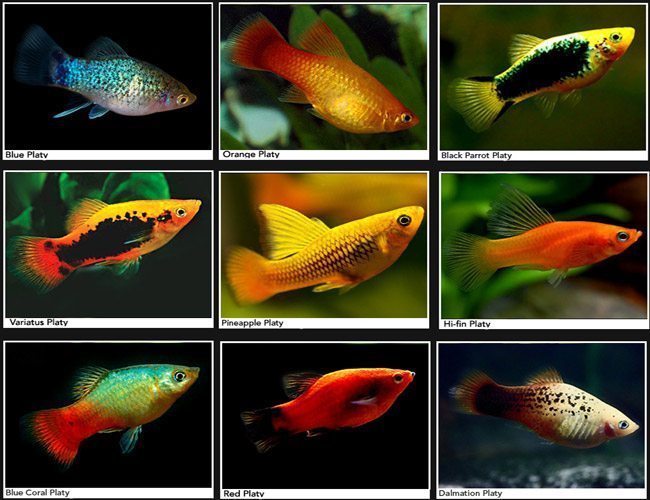
Platies and mollies are known for their stunning colors and variety. These fish are popular not only for their ease of care but also for the aesthetic diversity they can add to an aquarium. Here are some of the different colors and varieties available.
Platy Colors and Varieties:
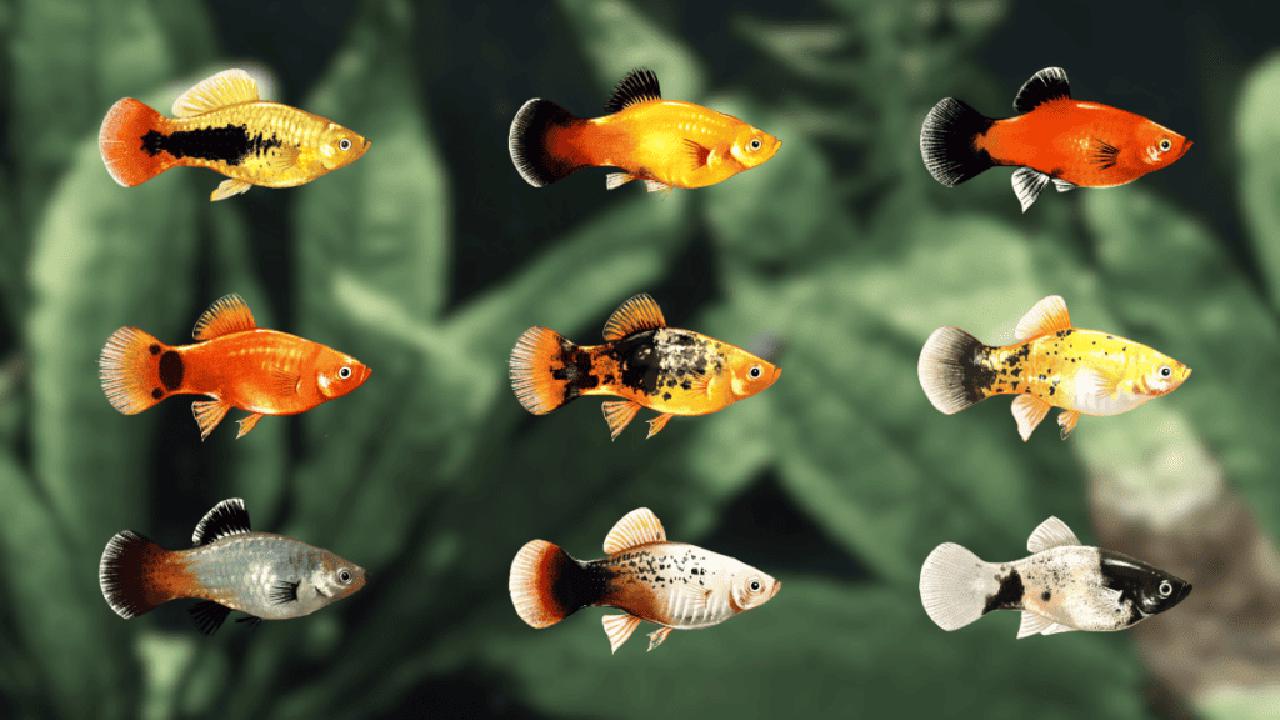
- Red Platies: These have a bright red color and are often the most common variety.
- Blue Platies: With a striking blue hue, these fish add a cool splash of color to your aquarium.
- Golden Platies: These have a golden sheen that glitters in the light.
- Wagenspoor Platies: Recognizable by their unique color variations and dark stripes along their bodies.
- Mickey Mouse Platys: These have unique markings on their tail fin that resemble Mickey Mouse's face.
- Tuxedo Platy's: This variety has a two-tone pattern, usually black combined with another color.
Colors and varieties of Mollies:
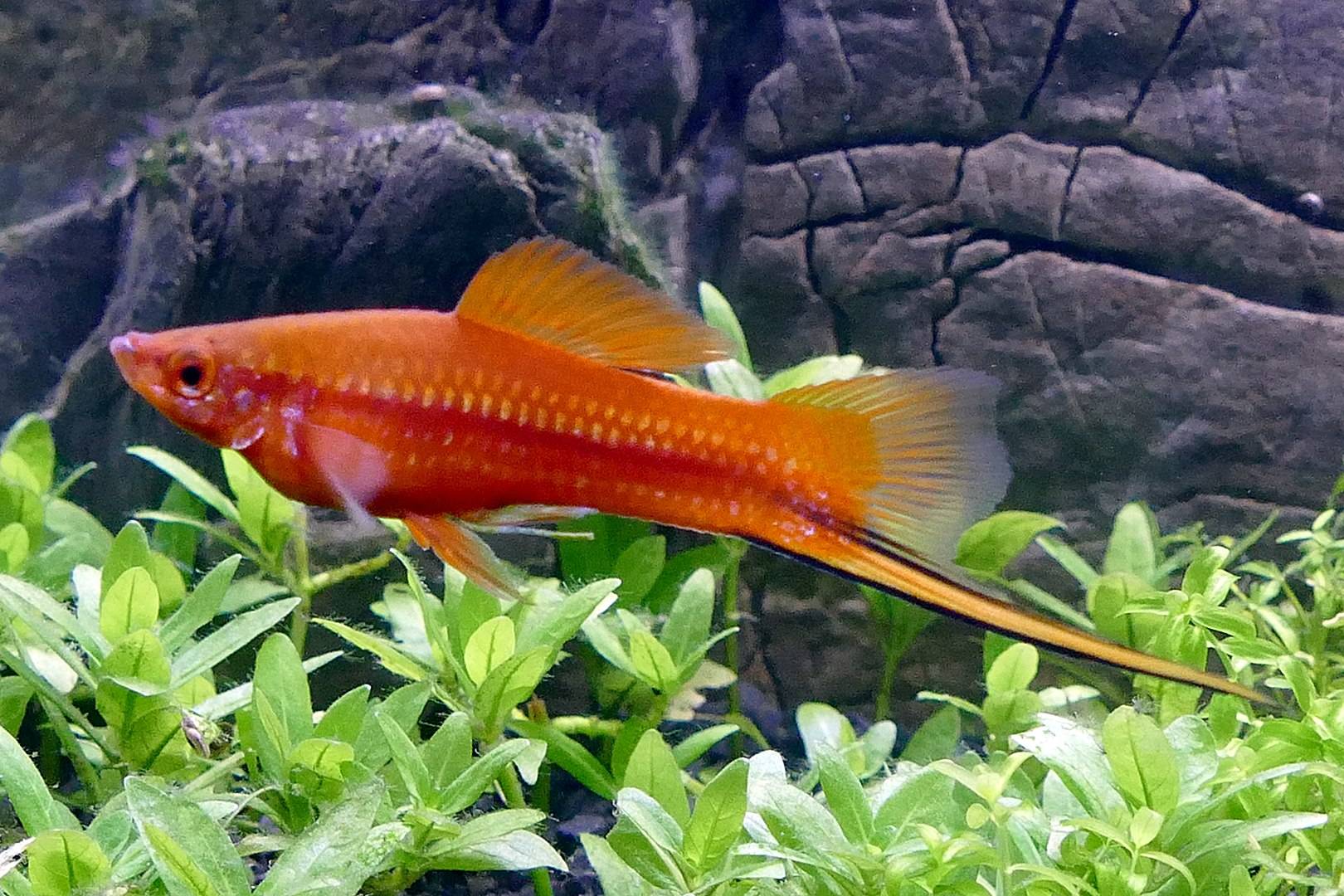
- Black Mollies: Completely black and elegant, this variety is a real eye-catcher in any aquarium.
- Dalmatian Mollies: These fish have a white body with black spots, similar to a Dalmatian dog.
- Silver Mollies: With a silvery sheen, these mollies add a subtle beauty to the aquarium.
- Gold Dust Mollies: These have a golden color with sometimes a hint of black, which gives a beautiful contrast.
- Lyretail Mollies: Recognizable by their long, graceful tail fin that resembles a lyre.
- Balloon Mollies: These mollies have a rounder, balloon-like shape and are available in various colors.

With so many beautiful colors and varieties to choose from, you can personalize and liven up your aquarium with Platies and Mollies. Whether you prefer the vibrant red and blue Platies or the elegant black and silver Mollies, there's a combination that perfectly suits your aquarium. However, you do need to know what kind of aquarium is right for you, which I'll explain in more detail in the next section.
What are the minimum aquarium requirements for keeping Platies and Mollies?
Platies and mollies are popular choices for both beginner and experienced aquarium enthusiasts due to their colorful appearance and minimal care requirements. To ensure these fish are healthy and happy, it's important to meet a few basic requirements. Below are the essential factors for setting up a suitable aquarium for platies and mollies.
Aquarium size
The minimum recommended aquarium size for platies and mollies is 60 liters. A larger aquarium offers more stability and space for the fish to swim and explore.
Water quality
- Temperature: Platies and mollies thrive in temperatures between 24-28°C. An aquarium heater can help maintain a stable temperature.
- pH: The ideal pH is between 7.0 and 8.2. Regular pH monitoring is essential for their health.
- Water hardness: These fish prefer hard water with a GH value between 10-25 dGH.
- Ammonia, Nitrite, and Nitrate: Ensure ammonia and nitrite levels are at 0 ppm and nitrate levels are no higher than 20 ppm.
Wondering if your aquarium is healthy? Ask us for free help! You can ask us anything about your aquarium through our WhatsApp aquarium helpline.
Send us a WhatsApp message and receive an answer within 24 hours >
Filtration and Aeration
Good filtration is crucial for maintaining water quality. Choose a filter that's appropriate for your aquarium size and offers both mechanical and biological filtration. Aeration via an air pump or a filter with an air tube can also help maintain sufficient oxygen in the water. Be sure to choose a filter with a high capacity for platies and mollies, as these small fish can be quite polluting. It's also easier to turn a filter down rather than up.
Aquarium furnishings
- Substrate: Use fine gravel or sand as a substrate to mimic a natural environment.
- Plants: Platies and mollies enjoy a well-planted aquarium. Choose sturdy plants like Java ferns, Anubias, and Vallisneria.
- Hiding Places: Add decorations like rocks, hollow logs, or plant pots to create hiding places.
Relief
Standard aquarium lighting for 6-8 hours per day is sufficient. Make sure the lighting isn't too bright, as this can stress the fish.
Maintenance
- Perform a partial water change of approximately 20-25% weekly to maintain water quality.
- Check water parameters regularly with a test kit to ensure values remain within desired ranges.
- Clean the filter monthly, but avoid replacing all filter media at the same time to maintain the maintenance of beneficial bacteria.
By following these minimum requirements, you can create a healthy and stable aquarium where platies and mollies can thrive. These colorful and active fish will bring your aquarium to life and provide you with a lot of enjoyment.
Professional maintenance for your aquarium? We understand how difficult it can be to get your aquarium in good condition. With 7 years of experience in maintenance, we're happy to help. Request free advice through our in-home aquarium service.
Visit the aquarium service page here with the current promotions >
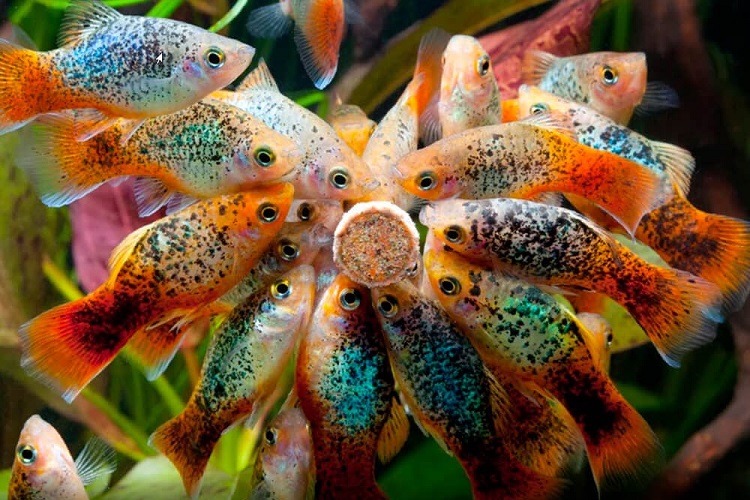
What do Platies and Mollies eat and how often should you feed them?
Platies and mollies are omnivores, meaning they eat both plant and animal foods. It's important to keep their diet varied and balanced to ensure they stay healthy and develop properly. Below is an overview of what platies and mollies eat and how often to feed them:
| Food type | Description | Frequency | Examples |
|---|---|---|---|
| Flake food | Staple foods that contain most essential nutrients. | Daily, 1-2 times a day | TetraMin, Sera Vipan |
| Pellets | Sinking food granules that dissolve slowly. | Daily, once a day | Hikari Micro Pellets |
| Vegetables | Shredded or cooked vegetables for extra fiber. | Weekly, | Spinach, Zucchini, Peas |
| Live and frozen food | Rich in proteins and perfect for a varied diet. | 2-3 times a week | Bloodworms, Brine shrimp, Daphnia |
| Algae waffles | For the vegetarians among the fish, contains essential nutrients. | Good as supplementary food for bottom-dwelling fish | Hikari Algae Wafers |
Feeding platies and mollies should be done carefully to avoid overfeeding and polluting the aquarium water. A good rule of thumb is to only feed as much as they can consume in about 2-3 minutes. By varying their diet and supplementing it with different types of food, you can ensure they stay healthy and happy.
Do Platies and Mollies live well with other fish species?
Platies and mollies are known for their peaceful and sociable nature, making them ideal for coexisting with a variety of other fish species. These fish are generally calm and get along well with other peaceful aquarium inhabitants. However, it's important to choose fish species with similar water parameters and behavioral traits to ensure a harmonious environment.
Fish species that live well with Platies and Mollies
- Neon Tetras : Small, colorful fish that swim in schools, creating a beautiful visual effect.
- Guppies : Very peaceful and colorful, perfect for a lively aquarium.
- Corydoras : Bottom dwellers that help keep the aquarium clean and get along well with Platies and Mollies.
- Zebra Danios : Active and playful fish that match well with the energetic nature of Platies and Mollies.
- Cardinal Tetras : Similar to Neon Tetras, but slightly larger and equally colorful.
- Endler's Livebearers : Close relatives of Guppies, known for their bright colors and active behavior.
- Otocinclus : Small algae eaters that help maintain a clean aquarium and are peaceful.
- Cherry Barbs : Peaceful and colorful fish that adapt well to a community aquarium.
- Snakeskin Gouramis : Peaceful and interesting additions to a community aquarium.
- Ramirezi Cichlids : Small and peaceful cichlids that get along well with other peaceful species.
By choosing these compatible fish species, you can create a vibrant and harmonious aquarium where platies and mollies can thrive alongside their tankmates. Be sure not to overcrowd the aquarium and keep the water parameters consistent for optimal health of all the fish.
Thanks for reading the full guide; a lot of work went into it. A feedback or a Google review of our blog service would be appreciated. Thanks so much, and see you next time! :-)
Any questions?
Send us a WhatsApp message >


